

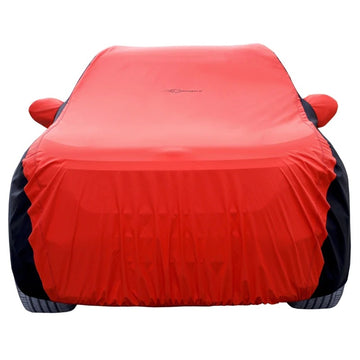
Do you need a car cover in winter? If your car spends the night in an open parking spot, yes: winter is when dew, fog, smog and dust land on the paint every single night, and a cover is the simplest way to keep that film off. The catch is that a car cover in winter has to be used a little differently from the rest of the year, because the same dew that dirties the car also wets the cover. This guide explains what an Indian winter does to a parked car, when a cover helps, when it doesn't, and the evening-and-morning routine that keeps both the car and the cover dry. If you are still looking for one made for your model, start with Neodrift's car covers.
Quick answer
- Yes, cover it if the car is parked outdoors overnight. Dew, fog, soot and dust settle on an uncovered car every night.
- Cover in the evening, once the car has cooled and before the dew falls, so the paint goes under the cover dry.
- Never cover a dew-wet car in the morning and leave it for days. Let it dry or wipe it first.
- Choose a breathable, water-resistant cover with a soft inner lining, made for your exact model.
- Dry the cover before you fold it away if it comes off wet.
What winter does to a car parked outside
Most car owners think of the monsoon and the summer sun as the hard seasons. Winter is quieter, but a car parked in the open still takes a steady beating from October to February, especially across north India.
Dew: the nightly wash with dirty water
On clear winter nights the car's metal and glass cool faster than the air, and moisture condenses on them as dew. By morning the roof, bonnet and windscreen are wet. Dew is not clean water: it collects the dust already sitting on the paint, and when the sun dries it, it leaves water spots and a muddy film behind. Do this every night for three months and the paint looks dull even if you wash the car every weekend.
Fog and smog: soot that sticks
In cities where winter brings smog, the fog carries fine soot and pollution particles. They settle on the car with the moisture and form a greasy grey layer that a dry cloth only smears around. On light-coloured cars it shows up as streaks along the roof and boot lid.
Dust, leaves and bird droppings
Winter is dry, so road dust hangs in the air and settles on parked cars. If you park under a tree, add falling leaves, sap and bird droppings, which can mark the paint if they sit for days. Our guide on how to remove bird droppings from car paint covers the safe way to clean them off.
Winter sun is still sun
Days are shorter and milder, but a car parked outside all day still gets UV on its paint, dashboard and seats. A cover that stays on through the day keeps that off too.
How a car cover helps in winter, and where it doesn't
A good cover sits between the car and everything above. Neodrift's covers are made to protect against dust, UV rays, light scratches, bird droppings and weather, which is most of the winter list above. The table below is an honest summary.
| Winter problem | Does a cover help? | What to keep in mind |
|---|---|---|
| Dew on the paint | Yes. The dew forms on the cover, not the paint. | The cover itself gets damp, so let it dry before folding it. |
| Fog and smog soot | Yes. The film settles on the fabric. | Shake the cover out now and then so the outside stays clean. |
| Dust | Yes, this is a cover's main job. | Only if the car was clean when covered; grit underneath can mark the paint. |
| Bird droppings and leaves | Yes. | Brush leaves off the cover before you remove it so they don't fall on the car. |
| Moisture already on the car | No. A cover can't dry a wet car. | Cover only a dry car. Breathable fabric lets moisture escape, but it is not a dryer. |
The last row is the one that matters most in winter. Neodrift's own FAQ is direct about it: improper use can trap moisture, so make sure the car is clean and reasonably dry before covering. The fabric is breathable so that moisture can escape, but if you put a cover over a car dripping with dew and leave it for a week, you are asking the fabric to do too much.
The winter routine: evening on, morning off
This is the routine that works for most people who park outside and drive most days.
Evening: cover a dry, cool car before the dew falls
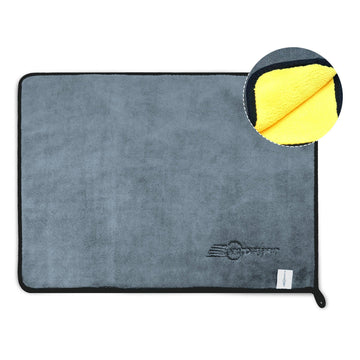
Dew usually starts forming after sunset and is heaviest towards dawn. So the best time to cover the car is in the evening, once the engine and exhaust have cooled, and before the paint gets wet. If the car is dusty from the day, don't dry-wipe it. Rinse it or mist the panels and lift the dust off with a clean microfiber cloth such as the Neodrift 800 GSM microfiber cloth, which is thick and absorbent enough to dry the panels afterwards. Then put the cover on mirrors first, front to back, as shown in our guide on how to put a car cover on and off without scratching the paint.
Morning: lift the cover off, don't drag it
On a dewy morning the outside of the cover will be wet. Release the bumpers, fold the sides up onto the roof with the wet outer face folded in on itself, then lift the cover off. Keep the wet outer side away from the paint and away from the cover's own inner lining as far as you can.
Dry the cover before you pack it
Don't stuff a wet cover into the boot or its bag. Spread it over a railing, a balcony or the bonnet of the car while you get ready, and fold it only once it is dry. A cover that is folded wet every morning for a month stays damp, smells musty and puts that damp straight back on the car in the evening. Our guide on how to fold a car cover shows the neat way to pack it.
If you only drive at weekends
A car that stands for days needs a slightly different rhythm. Neodrift's fitting instructions advise against leaving a car covered and parked in rain, sun or dust for more than 48 hours at a stretch. In winter, pick a dry, sunny afternoon every two days or so, take the cover off for an hour or two, let the car and the cover air out, then put it back before evening.
Pro tip: if you missed the evening window
Got home late and the car is already wet with dew? It is better to leave it uncovered for that night than to trap the wet under the cover. Wipe the dew off in the morning with a clean microfiber cloth before it dries into spots, and cover the car that evening as usual.
Choosing a car cover for winter
You don't need a separate winter cover. The same qualities that make a cover good in the monsoon and summer matter in winter, with breathability moving to the top of the list.
- Breathable fabric. In winter this is the most important point, because it lets the moisture under the cover escape instead of sitting on the paint. Neodrift covers use multi-layer, breathable fabric.
- Water-resistant, not waterproof. A fully sealed plastic sheet keeps dew out but also keeps moisture in. Neodrift covers are water-resistant: they shed dew and light rain, and the small amount that passes through evaporates quickly. Our guide on water-resistant and dustproof car covers explains why that balance is deliberate.
- A soft inner lining. Neodrift covers have a soft, scratch-resistant inner lining, which matters when the cover goes on and off every day.
- A model-specific fit. A loose cover flaps in the night breeze and lets dust blow underneath. Neodrift makes its covers model by model; select your exact model year when you order, and if no year is shown, the cover fits all variants. Cars with a big antenna get a separate antenna pocket.
- A way to tie it down. Winter evenings can be breezy. The SuperTech tier comes with a buckle belt; the other tiers have grommet holes for a rope tie.
Neodrift covers come in tiers, from SuperTech and NeoTech down to CrystalTech and JungleTech. The listings note that a cover's life depends on the tier and the weather it faces, and the stronger tiers last longer in harsh conditions. If your car is parked in the open all winter, especially under trees or in a smoggy city, lean towards a stronger tier. Our guide to which material suits a car cover compares them in more detail.
Common mistakes to avoid
- Covering a dew-wet car in the morning and leaving it for days. That traps moisture against the paint.
- Folding the cover wet every morning. It stays damp and gets musty.
- Dry-wiping dust or soot off the paint before covering. Mist it and lift it with microfiber instead.
- Using a tarpaulin or plastic sheet. It doesn't fit, can scratch the paint and traps moisture underneath.
- Covering a hot car straight after a drive. Let the engine and exhaust cool first.
- Leaving a loose cover untied on a breezy night. The flapping is what rubs the paint.
FAQs
Is it good to cover a car in winter?
Yes, if it is parked outdoors. A cover keeps dew, fog, soot, dust and bird droppings off the paint. The key is to cover the car while it is dry, usually in the evening, and to let the cover dry when it comes off damp.
Can I put a car cover on a wet car?
It is better not to. Neodrift's covers are breathable so that moisture can escape, but the safest habit is to cover only a clean, reasonably dry car. If the car is wet, wipe it dry or wait.
Does a car cover stop dew?
It stops dew from forming on the paint and glass, because the dew forms on the cover instead. That is why the cover is often wet in the morning and needs a few minutes to dry before you fold it.
Will a cover stop my windscreen from fogging up inside?
Not really. Fog on the inside of the glass comes from moisture in the cabin. A cover does keep dew off the outside of the windscreen, so you start the morning with clear outer glass. For the inside, see our guide on why your windshield fogs up and how to stop it.
Should I keep the cover on all day in winter?
If the car is parked outside all day, yes, it keeps off dust and UV. If it stands for several days, take the cover off every couple of days on a dry afternoon to let everything air out.
Find a cover made for your car
A winter routine is far easier with a cover that fits: it goes on quickly in the evening, sits snugly over the mirrors and doesn't flap in the breeze. Browse all Neodrift car covers and pick your model and year, or go straight to popular fits like the Maruti Suzuki Swift car cover, the Tata Nexon car cover and the Hyundai Creta car cover. Not sure whether a cover can harm your paint? Our guide on whether car covers damage paint answers that.
Cover photo: Mathias Reding / Pexels