

Good car cover care and maintenance comes down to four habits: shake the dust off before you fold it, wash it by hand with mild soap when it gets grimy, let it dry completely in the open, and store it rolled up in a dry bag. That's all it takes, and it decides whether a cover keeps protecting your paint for years or starts scratching it within months. This guide explains each step, why it matters in Indian dust and monsoon conditions, and the mistakes that quietly ruin a good cover. If you are shopping for a new one, start with Neodrift's car covers, made to fit specific car models.
Quick answer
- Every time you take it off: fold the dusty outside inwards so the soft inner side stays clean.
- When it is visibly grimy: wash it by hand, on the car or laid flat, with mild soap and plenty of water.
- Never: fabric softener, bleach, a clothes dryer or an iron, unless your cover's label says otherwise.
- Before storing: it must be completely dry. A damp, folded cover is how mildew and smells start.
- Always: check the care label first. Covers are made from different fabrics, and the label beats any general guide, this one included.
Why a car cover needs looking after at all
A cover only protects the paint if the side touching the paint is clean. Think about what an outdoor cover goes through in a normal Indian week: road dust, construction dust, leaves, bird droppings, and in the monsoon, muddy splashes along the lower edge. That grime sits on the outside. The trouble starts when it gets onto the inside, usually because the cover was dropped on the ground or folded carelessly. The next time you put it on, that grit is pressed against your paint and rubbed in by every gust of wind.
That is the real answer to the question we cover in do car covers damage paint: a clean cover on a clean car does not, and a dirty cover on a dirty car can. Most of car cover maintenance is simply keeping those two sides apart.
One thing to keep in mind as you read: Neodrift covers are water-resistant, not waterproof, and their fabric is breathable so moisture can escape. That breathability is exactly why drying and storage matter so much, as you will see below.
Everyday care: the two-minute habits
Most covers never need a deep wash if these become routine.
- Put it on a reasonably clean, dry car. Covering a dusty car traps the dust under the cover, and covering a wet car traps moisture against the paint. If the car is wet after rain or a wash, let it dry first. Our step-by-step guide on how to put a car cover on shows the order that keeps the inner side off the ground.
- Shake or brush off loose dust before removing it. A soft brush or a gentle shake while the cover is still on the car stops the dust falling onto the inner side as you fold.
- Fold inwards, never let it touch the ground. Fold each side up onto the roof, outside surface folding onto itself, then roll from one end to the other. The method is in our guide to folding a car cover.
- Deal with bird droppings quickly. Lift them off with a damp cloth before they dry and bake on in the sun. If one has soaked through, clean the car underneath too. Clean that spot of paint gently as well.
- Never drag it across the car. Lift and place. Dragging a cover pulls whatever is on the paint across the paint.
How to wash a car cover, step by step
Wash it when the outside is visibly caked, when it smells musty, or when the inner lining has picked up dust or sand. There is no fixed calendar. A car parked under a tree near a construction site needs it far more often than one in a covered porch. When in doubt, hand washing is the safest method for any cover.
Method 1: wash it on the car (easiest for most people)
- Wash the car first, or at least make sure it is clean, because the cover will be sitting on it wet.
- Put the cover on and hose it down gently to loosen surface dirt.
- Mix a mild soap or gentle liquid detergent in a bucket of lukewarm water. Avoid harsh cleaners and anything with bleach.
- Wash with a soft sponge, top to bottom, the same way you would wash the car. Use a soft brush only on stubborn spots, such as dried droppings or mud on the lower edge.
- Rinse thoroughly. Soap left in the fabric can hold on to dirt, so rinse until the water runs clear.
- Turn it inside out and repeat lightly if the inner side needs it, then rinse again.
Method 2: wash it laid flat
If you have a clean terrace or a swept patch of floor, spread a clean sheet down and lay the cover flat on it. Wash one half, flip, wash the other, and rinse well. Don't lay it on bare ground. You will undo the wash the moment you pick it up.
What about the washing machine?
A full car cover is big and heavy when wet. Covercraft, a large US cover maker, tells owners not to use a washer with a centre agitator and suggests a large commercial machine without one; other cover sellers add a gentle cycle with cold water and mild detergent. Most home machines in India don't meet that bar. A typical top-loader with an agitator can twist and strain the seams. Unless your cover's label says it can be machine washed, wash it by hand.
Pro tip: dry it where it lives
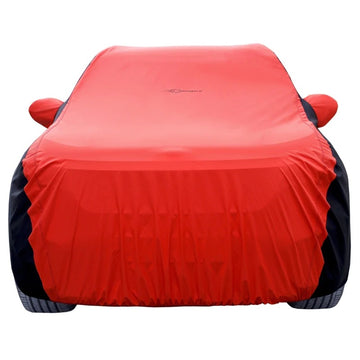
After washing on the car, leave the cover on the car to air-dry, ideally in light shade with some breeze. It keeps its shape, dries evenly, and you are not hunting for a clean surface big enough to spread it on. Before folding, check the seams, the elastic hem and any straps by hand, because those are the last places to dry.
Drying: the step that decides how long it lasts
The care guides from cover makers agree on one thing: air-dry it, and make sure it is completely dry before folding. Don't put it in a clothes dryer and don't iron it, unless the manufacturer says that is fine. Heat can damage or shrink cover fabrics, and a shrunk cover no longer fits the car it was made for.
In the Indian monsoon this is harder than it sounds. A cover can feel dry on top and still be damp in the folds, around the elastic and under the straps. Folding it like that and leaving it in a bag or boot for a few days is the most common way covers start to smell and develop mildew spots. If the weather won't let it dry, leave it loosely draped over the car, or over a clothes line under a roof, until it does. Wiping the last damp patches with a dry towel also helps.
Storing a car cover when you're not using it
- Only store it bone dry. This is the rule that matters most.
- Roll, don't scrunch. Fold the sides inwards and roll from one end. A neat roll is quicker to put back on and keeps the inner side protected.
- Use the storage bag. Neodrift covers come with their own storage bag; keep the bagged cover somewhere clean and dry. A boot that stays humid in the monsoon is not ideal for long-term storage. Keep the cover indoors if the car won't be covered for weeks.
Routine checks: is your cover still doing its job?
| Check | What to look for | What to do |
|---|---|---|
| Inner lining | Grit or sand you can feel with your palm | Wash before the next use |
| Elastic hem | Loose or sagging, cover lifts in wind | A flapping cover rubs the paint; tighten straps or ties |
| Straps, ties, buckles | Fraying, missing ties, broken clips | Replace the rope or tie so the cover stays put |
| Seams and fabric | Tears, thin patches, water coming through in light rain | Time to think about a replacement |
| Smell | Musty or sour | Wash and dry it fully in the open |
How long a cover lasts depends mostly on two things, and the Neodrift listings say so plainly: which variant you chose and the weather it lives in. A cover facing full sun and rain every day on an open street wears faster than one under a porch. If your car stays outdoors all year, a higher variant is worth considering when you replace it. Neodrift offers several, and each model-specific cover, such as the one for the Tata Nexon, lists them on its page.
Common mistakes to avoid
- Folding it wet. The cover will smell within days and may develop mildew. Dry first, always.
- Fabric softener, bleach or harsh cleaners. Covercraft specifically says not to use fabric softener. Stick to mild soap unless your cover's label says otherwise.
- Tumble-drying or ironing. Heat can shrink or damage the material, and a shrunk cover won't fit properly again.
- Letting the inner side touch the floor. One drop on a dusty basement floor and the lining is now carrying grit to your paint.
- Covering a dirty or wet car. The cover can't fix what is underneath it. A clean, dry car is step zero.
- Skipping the rinse. Soap left in the fabric attracts dirt faster.
FAQs
Can I wash a car cover in a washing machine?
Only if the care label allows it, and only in a machine big enough for it. Where machine washing is allowed, cover makers such as Covercraft point you to a large machine without a centre agitator, on a gentle cycle. For most home machines, hand washing on the car is the safer choice.
How often should I clean my car cover?
Brush or shake off dust whenever you take it off. Do a full wash when it is visibly dirty, smells musty, or the inner side has picked up grit. Covers on cars parked under trees, near construction or on a dusty street need washing more often than covers in sheltered parking.
Can I use a car cover in the rain?
Yes. Neodrift covers are water-resistant, which suits light to moderate rain. They are not waterproof, so in heavy rain a little water can pass through. Let the car and cover dry before you fold it away.
Why does my car cover smell?
Almost always because it was folded or bagged while still damp. Wash it with mild soap, rinse well, and let it dry completely in the open before storing it again.
Do I need to wash the car before putting the cover on?
It doesn't have to be freshly washed, but it should be reasonably clean and dry. Heavy dust under a cover gets rubbed against the paint, and moisture under a cover has nowhere to go quickly.
Keep the cover and the car clean together
A cover that is folded inwards, washed by hand when it needs it and stored dry will keep doing its job for a long time. If yours is past saving, Neodrift car covers are cut for specific models, like the ones for the Maruti Suzuki Swift and the Hyundai Creta, with an antenna pocket where a model has a large antenna. Not sure which one to order? The car cover size guide walks you through matching it to your car. For the car itself, a soft microfiber cloth is the gentlest way to wipe off dust before the cover goes on.
Cover photo: Mathias Reding / Pexels